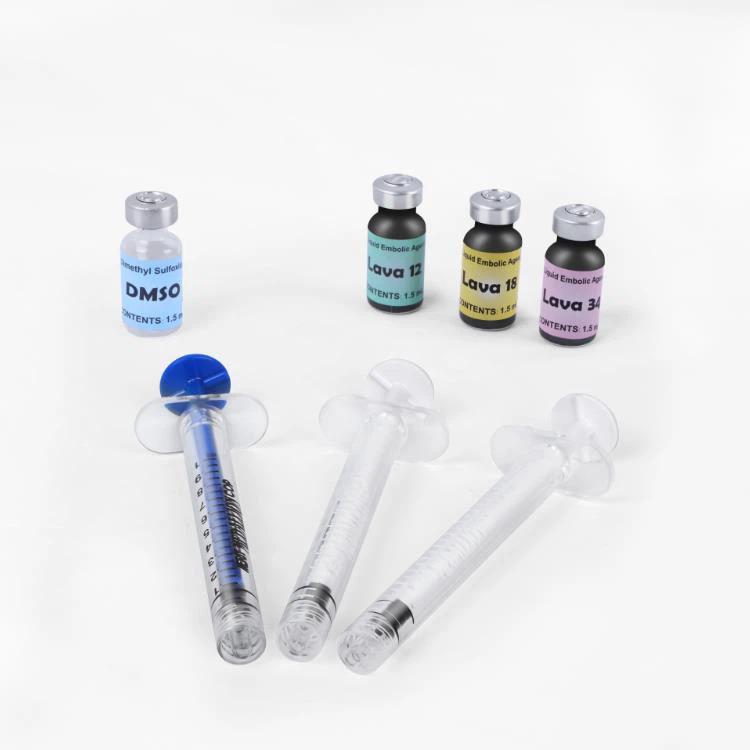
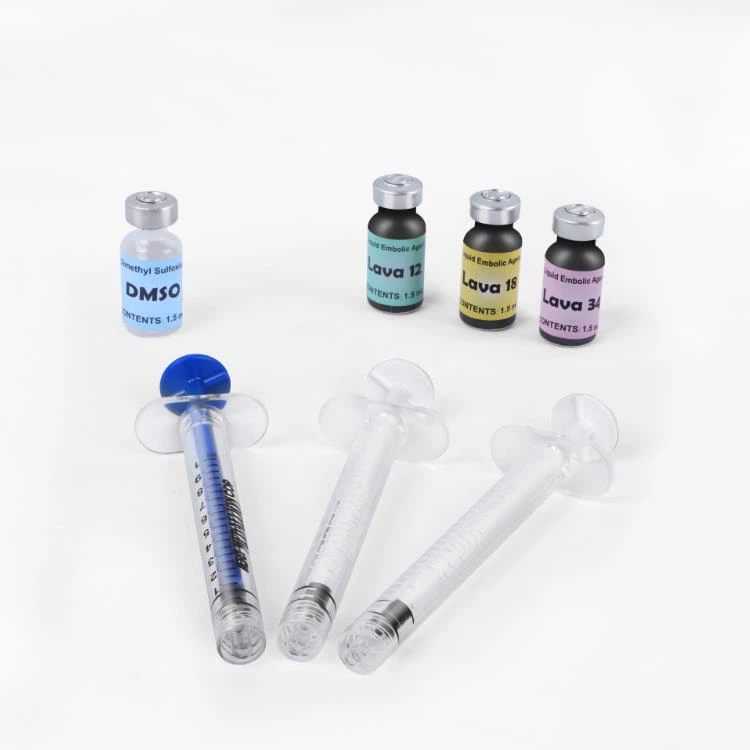
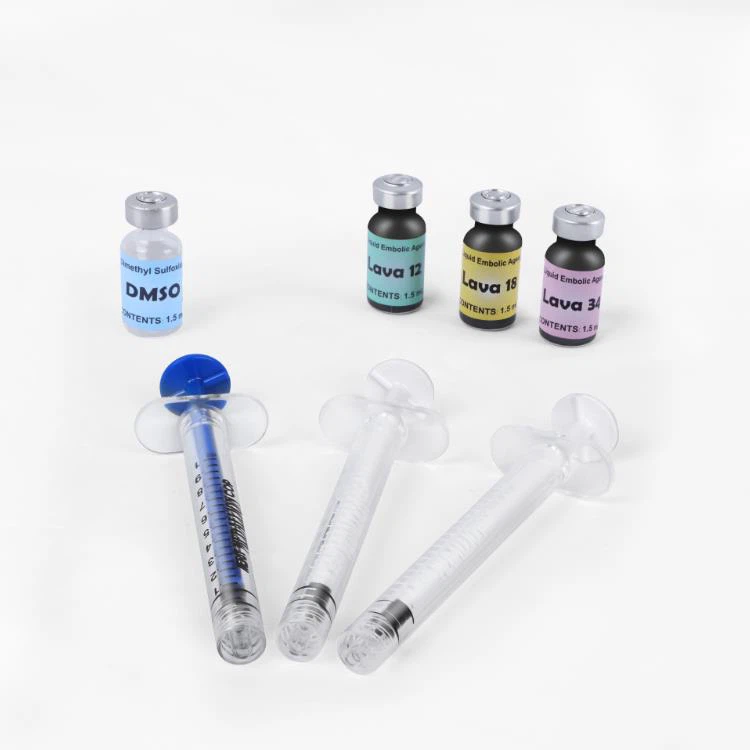
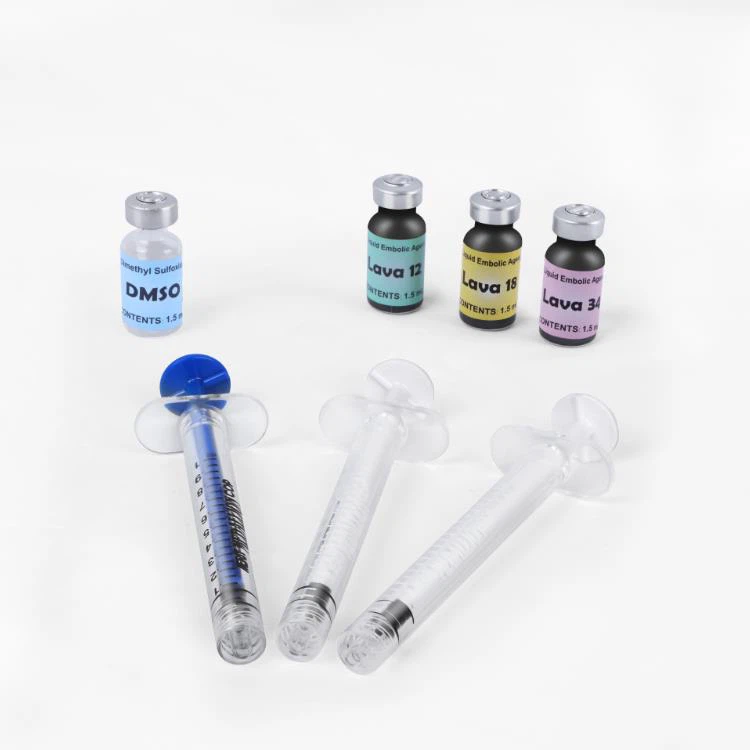
Lava is a liquid embolic agent that is composed of ethylene-vinyl alcohol copolymer. It is one of the most commonly used agents for embolization and has been shown to be effective in treating various vascular disorders. The unique feature of Lava is its low viscosity, which allows it to be..
Lava is a liquid embolic agent that is composed of ethylene-vinyl alcohol copolymer. It is one of the most commonly used agents for embolization and has been shown to be effective in treating various vascular disorders. The unique feature of Lava is its low viscosity, which allows it to be injected into even the smallest blood vessels. Once it is injected, it hardens and solidifies, creating a permanent blockage in the blood vessels. Lava has several advantages over other liquid embolic agents such as better penetration and longer working time. Interventional embolization is a medical procedure that is often used to treat various conditions such as aneurysms, arteriovenous malformations, and tumors. Embolization involves the use of a liquid embolic agent, which is injected into the blood vessels to block the flow of blood. This procedure is minimally invasive and has a lower risk of complications compared to surgical interventions. There are several models of Lava Liquid Embolic Agents, including Lava-12, Lava-18, and Lava-34. These different models have varying viscosity, which allow for a more precise and tailored treatment approach based on the specific pathology and anatomy of the patient. The features of LAVA Liquid Embolic Agent is that it is able to flow easily through the catheter and into the targeted site, where they quickly set up to form a solid, non-adhesive plug. This allows for more rapid and efficient occlusion of the targeted vessel, reducing the risk of complications and improving patient outcomes.
Features &Advantages
1. Lava Liquid Embolic Agents is a non-adhesive material, which means it has low injection resistance. This feature makes it easy to use and safer since withdrawing it is relatively simple, making it highly suitable for complex embolization procedures. In contrast to other embolic agents, which may create a vacuum effect during injection, Lava reduces the incidence of reflux and can help prevent unwanted migration of the material. Its non-adhesive nature also makes it less likely to cause tissue damage during the procedure, promoting an excellent cosmetic outcome.
2. Lava has a unique low-viscosity formula, which makes it more comfortable to use. The product comes in three different sizes, LAVA-12, LAVA-18, and LAVA-34, which are suitable for both small and large vessels. Due to its low viscosity, it flows freely, spreading evenly throughout the target area, and thus increasing its efficacy. This feature also means the agent can penetrate the deepest parts of the lesion and reach remote microvascular regions that are inaccessible to other materials.
3. One of the most significant advantages is its superior dispersibility and permeability. The agent can disperse deep into the targeted tissues and reach even the smallest of blood vessels. This makes it highly suitable for the treatment of complex lesions, including arteriovenous malformations.
4. Lava features a unique anti-sedimentation formula that makes it less prone to settling. The process of settlement can be problematic, as it can limit the efficacy of the agent and cause complications such as embolism or migration. Moreover, Lava use finer particles of tantalum, which create better imaging properties. This feature improves visualization during the procedure, making it easier for surgeons to identify the precise location of the target and avoid complications.