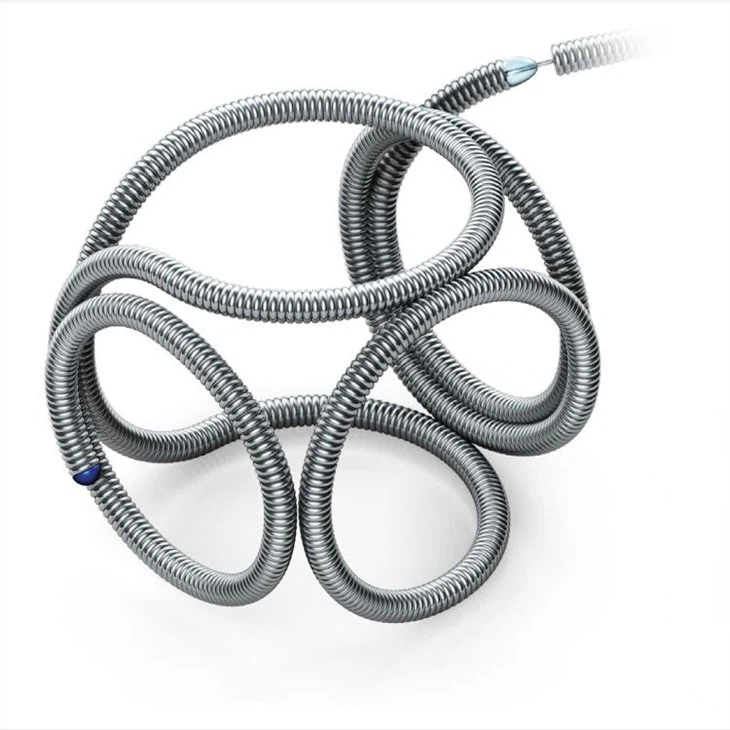
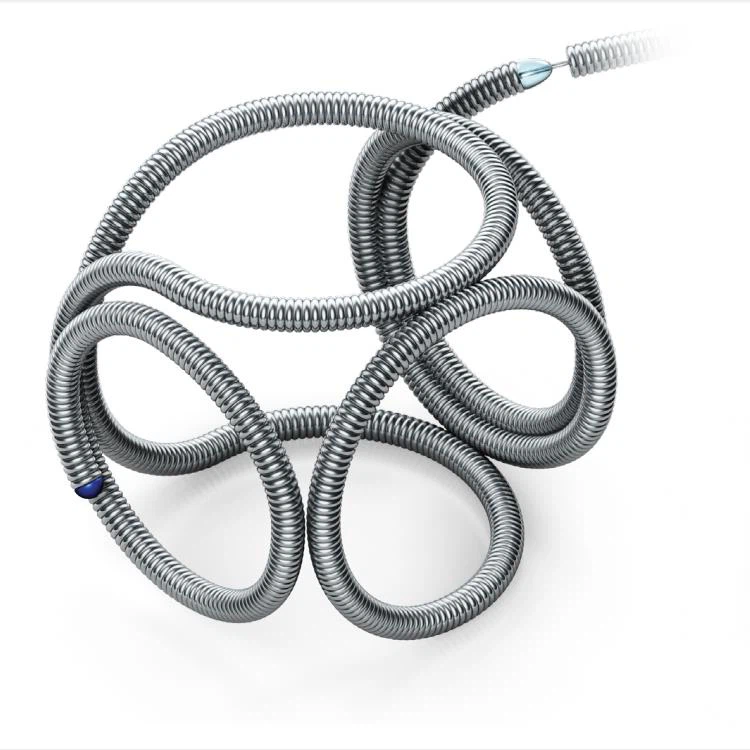
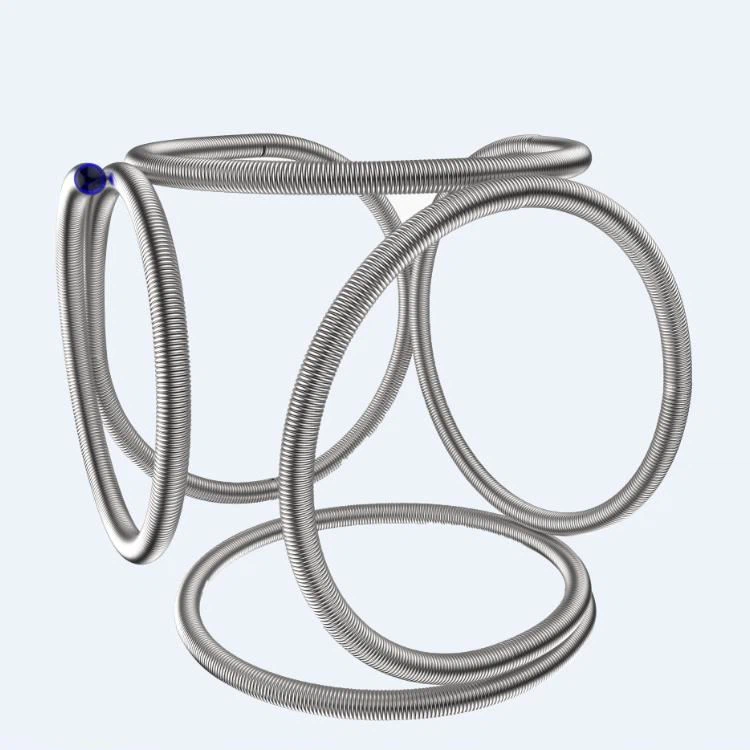
RenovaTM endovascular aneurysm coiling is a minimally invasive surgical procedure used to treat intracranial aneurysms. The procedure involves inserting a catheter through a small incision in the groin and navigating it to the site of the aneurysm. Once the catheter reaches the aneurysm, a soft platinum coil is introduced to fill up the aneurysmal sac, promoting clotting, and preventing rupture. Renova has various softness levels and sizes that cater to different aneurysmal cases. This attribute is critical for the successful treatment of aneurysms. It is essential to note that different aneurysms require varying coil characteristics to attain optimal obliteration. First, the different softness levels ensure that the coils conform to the shape of the aneurysm when placed within the sac. This pliability promotes the creation of a tight packing density that prohibits blood from entering the sac, resulting in clot formation and eventual obliteration of the aneurysm. Moreover, the pliability of the coils ensures that they can be inserted through the catheter easily. Secondly, the sizes of the coils match the size of the aneurysms, ensuring optimal treatment results. The correct sizing ensures there are enough coils to fill the sac completely, while at the same time, not placing unnecessary pressure on the aneurysm's walls.
Product Features
1. Various softness levels and sizes conform to the shape of the aneurysm when placed within the sac. This pliability promotes the creation of a tight packing density that prohibits blood from entering the sac, resulting in clot formation and eventual obliteration of the aneurysm.
2. Open loop design design allows for a more complete filling of the aneurysmal sac, as it minimizes compartmentalization and distributes evenly. The open loop design of endovascular aneurysm coiling allows them to conform to the shape of the aneurysm in a better way than closed loop coils.
3. The smaller first 1.5 loops of the secondary coil greatly reduces this risk, making endovascular aneurysm coiling a safer and more effective treatment option for patients with brain aneurysms.
4. Shorter detachment zone greatly minimizes kick-back microcatheter. This capability allows for a more effective and safer treatment procedure for patients.
5. Frame securely, fill uniformly and finish by seeking voids within aneurysm. This ensures that the coils remain in place and provide adequate coverage to prevent blood from entering the aneurysm.
5. Detachment tactile sense and visual sense duplex feedback provides the operator with a tactile sensation that informs them of the precise moment when the coil is detached from the device and inserted into the aneurysm. This feedback system allows the operator to verify that the coil has been properly positioned and detached, significantly reducing the risk of complications, such as coil migration or embolization.