Seal seam stability test
The annual routine inspection for packaging processes.
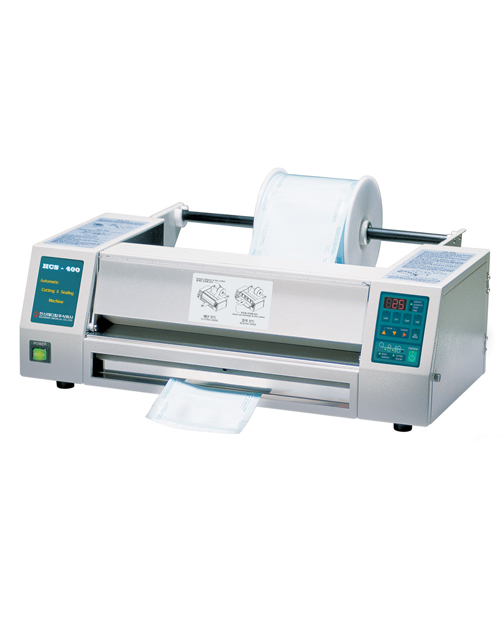
For the validation of packaging processes and for the performance evaluation of sealing devices, the inspection of the sealing seams for tensile strength is required as an annual routine check.
The seal seam strength test is a standardized test procedure for the performance evaluation of your sealing device. It is performed using a state-of-the-art tensile strength testing machine - for guaranteed valid results.
-Annual performance evaluation
The test is performed with a state-of-the-art tensile strength testing machine - for guaranteed valid results.
-Standard compliant validation
The seal seam stability test is a standardized test method for evaluating the performance of your sealing device.
-Legally compliant certificate
After successful testing, you will receive a certificate from MELAG confirming the conformity with the standard DIN EN 868-5, Appendix D.
Safety guaranteed:
10,000 tests, 0 compromises
Thank you for your trust: In the last 5 years alone, we have carried out over 10,000 seal seam strength tests.
It's that simple:
Please fill out the order form and send it together with the sample strips to MELAG. The following instructions will provide you with all the information you need to create the test strips. After successful testing, you will receive a certificate from MELAG confirming the conformity of your sealing seams with the standard DIN EN 868-5, Appendix D.
Step 1
Cut 3 sample strips 10 cm long from the narrowest packaging format used in practice.
Step 2
Cut a test strip 10 cm long from each wider format.
Step 3
Provide all test strips with two sealing seams at a distance of approx. 5 cm.
Step 4
Mark all sample strips with a consecutive number.
Step 5
Sterilize all sample strips in the universal program (134 °C) of your autoclave.
Step 6
Complete the order form in full and send it to MELAG together with the sample strips.
Commission us now:
In the following form you will find all the information you need to carry out the seal strength test in your practice for just €80 (net) by the end of the year.
Sealing seam stability test as a routine test for sealing devices
The seal strength is a decisive factor in the packaging of medical and sterile products. A reliable seal seam stability test ensures that the packaging does not fail under sterilization conditions and during transport, but at the same time is easy to open when it is needed in use.
Why is seal strength important?
The seal seam of medical packaging has two main tasks: It must form a barrier against germs and must not open during storage of sterilized instruments. At the same time, it must be easy to open if necessary so that medical professionals can access the sterile instruments quickly. A defective seal seam could lead to contamination of the sterilized products, which could have serious health consequences.
Standards and test methods
There are various standards for testing the strength of sealed seams, including ASTM F88/F88M and DIN EN 868-5. These standards define the procedures and requirements for testing. For example, ASTM F88 describes the method for determining the force required to open a sealed seam. Samples of the sealed seam are pulled to a certain speed in a pulling machine in order to measure the opening force.
Carrying out the seal seam stability test
The test process involves several steps: Sample preparation: strips are taken from the sealed seam, typically 15 mm wide.
Tensile test:These strips are clamped in the jaws of a tensile machine and pulled apart at a defined speed. The force required is recorded.
Analysis:The results are compared with the specified standards to ensure that the seal seam meets the required standards.
Advantages of regular seal seam testing
Regular seal testing offers numerous benefits that go beyond simple compliance and play an essential role in quality assurance and risk management.
Safety:It ensures that the packaging provides the required protection and that the sterility of the products is maintained during storage.
Compliance:It meets legal requirements and standards, which is particularly important for audits and regulatory authorities.
Quality assurance:It contributes to the continuous improvement of quality management and hygiene processes.
Conclusion
The seal strength is an indispensable part of quality control for medical packaging. The safety and effectiveness of sterile packaging can be ensured by complying with the relevant standards and carrying out regular seal strength tests. Practices and clinics should use reliable service providers to continuously check and improve their packaging processes.