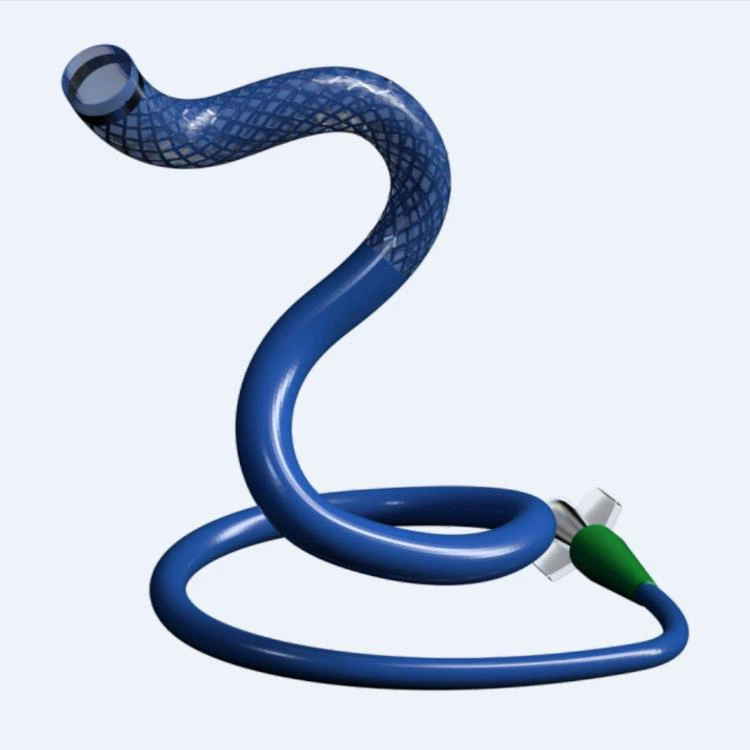
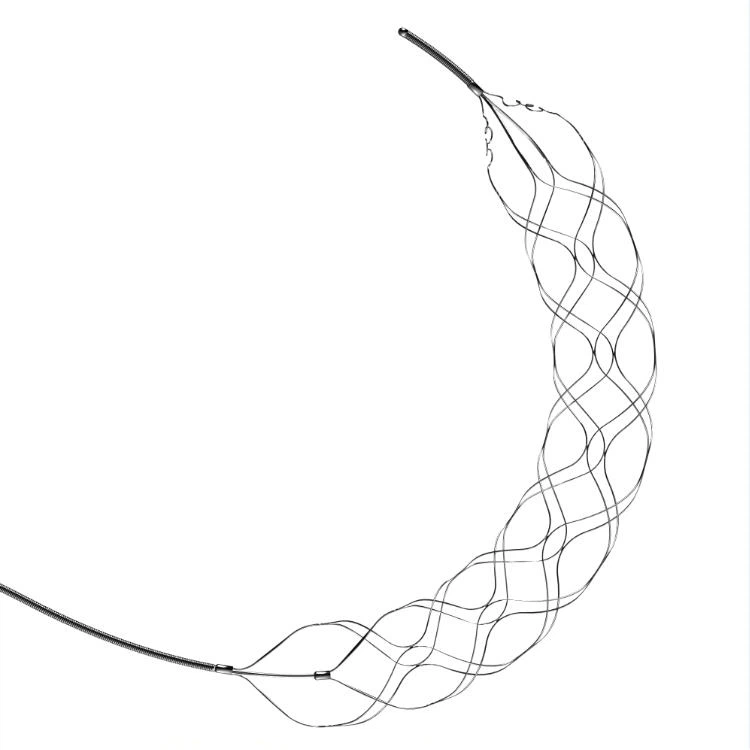
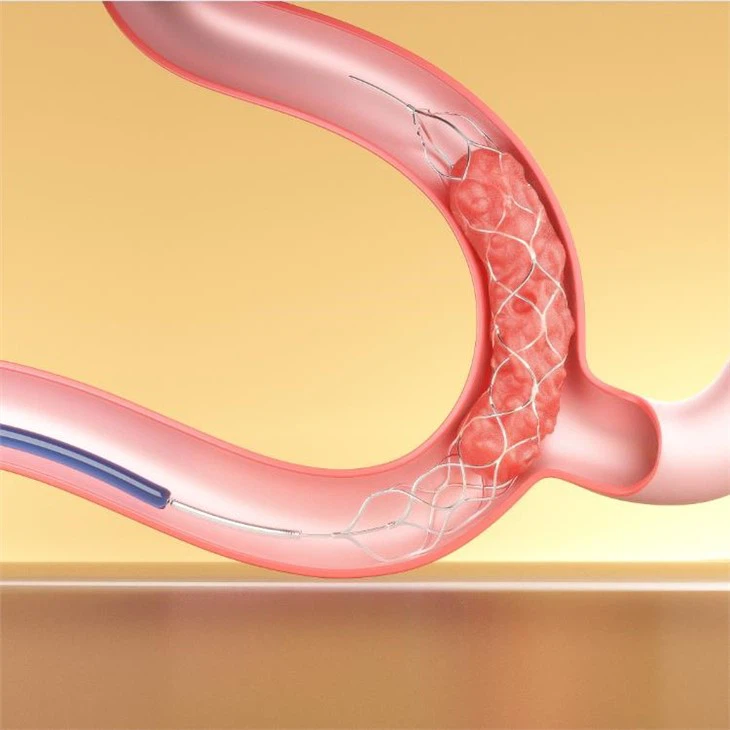
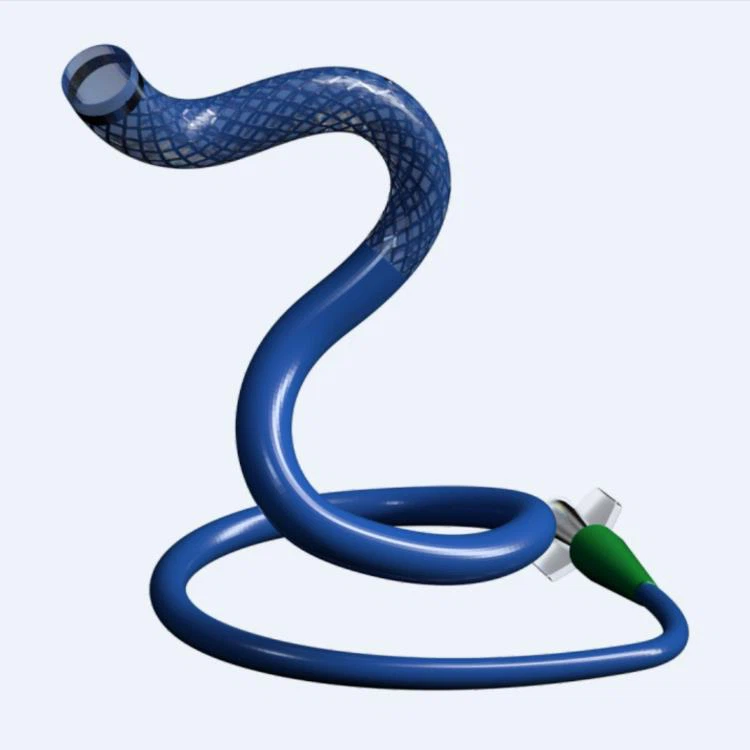
The DredgerTM Stent Retriever Thrombectomy is recommended way of treatment for the patients who suffer ischemic stroke in minimally invasive surgical procedure. The stent retriever will be used to remove blood clots and restore blood flow in the brain.
RD-7-42 Stent Retriever Thrombectomy
The push wire of the DredgerTM Stent Retriever Thrombectomy is made of Nitinol. It is super elastic. No worry kinks and delivery problems occur in the procedure. DredgerTM Stent Retriever Thrombectomy is a new method for the treatment of stroke, which can greatly improve the survival rate and quality of life of patients. This method is characterized by non-invasive development throughout the whole process, unique soft end, changeable net bag, large closed-loop design of the mesh design, and prominent features of the push rod.
Product Features & Advantages
1. The changeable net pocket means that in rtent retriever thrombectomy, the operating doctor can design different net pockets according to the patient's condition, making the adsorption and removal of thrombus more flexible and controllable, and also improving the success rate of treatment.
2. The non-invasive development of the whole process means that stent retriever thrombectomy does not require incision or puncture during the implementation process, but only needs to go through blood vessel catheterization. This greatly reduces the patient's pain and surgical risk, and reduces the burden on family members.
3. The full-length is visible, and the whole effective length visual feedback.
4. Larger push wire is made of optical fiber material and integrated wire material, which greatly improves the strength and stability of the push rod, making the operation easier, more accurate and safer for doctors.
5. The blood clots were captured in lower radial outward force mainly due to clamping of grid cell changes.
6. Closed-loop design means that both the net bag and the mesh in StentRetrieverThrombectomy adopt a closed-loop design. This design can better grasp the thrombus, reduce the displacement of the thrombus, and improve the accuracy and safety of treatment. The large closed-loop design can adapt to different vessel sizes and thrombus characteristics, increasing the flexibility of treatment.