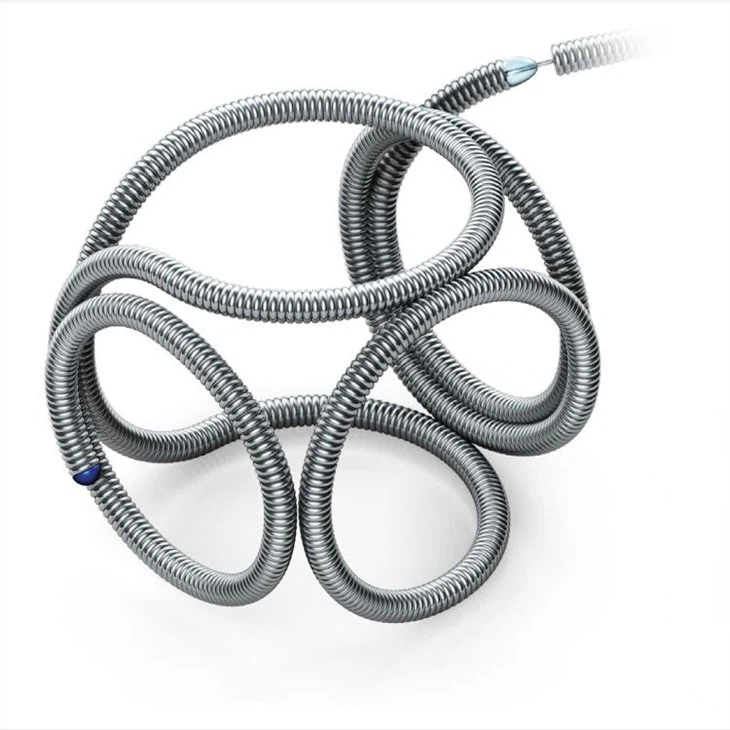
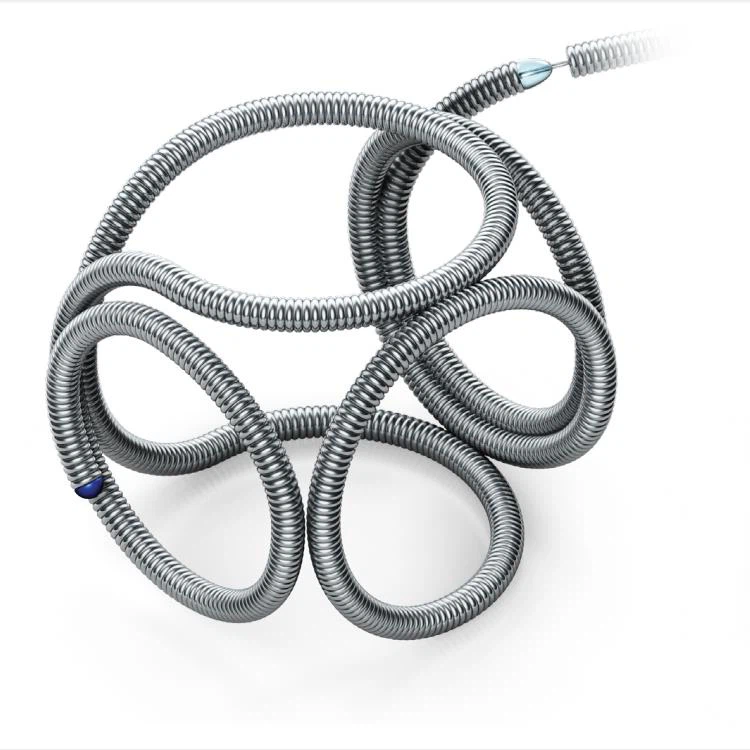
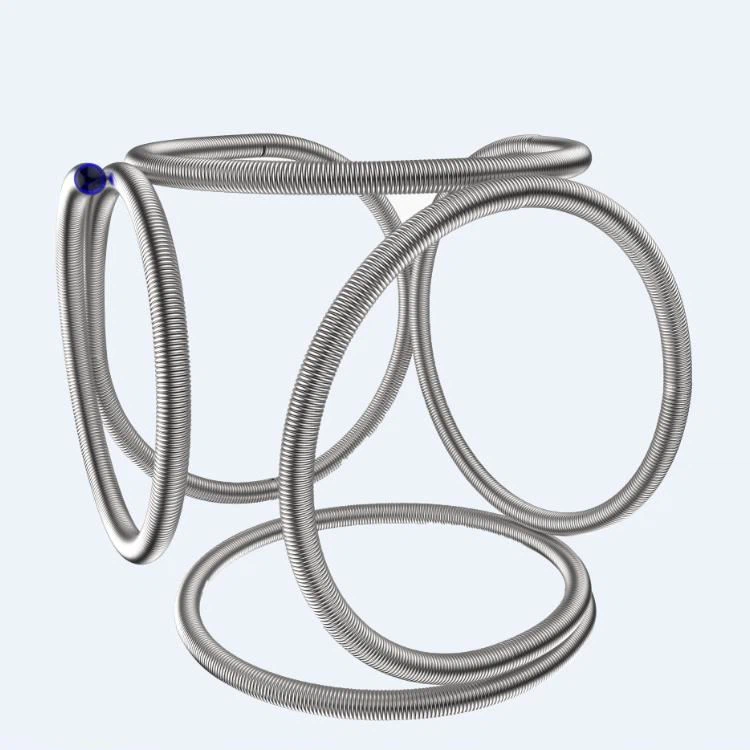
The RenovaTM brain aneurysm endovascular coiling is the neurovascular embolization coils designed for the embolization of intracranial aneurysms and other neurovascular abnormalities, such as arteriovenous malformations and arteriovenous fistulae. Broad range of complex, 3D and helical sizes are provided among aneurysm coiling.
The goal of RenovaTM brain aneurysm endovascular coiling is is a minimally invasive method used to treat ruptured or unruptured cerebral aneurysms. Aneurysms are balloon-like bulges that form in the blood vessels in the brain. If an aneurysm ruptures, it could cause a life-threatening brain hemorrhage. Endovascular coiling involves navigating a microcatheter through the arteries to the aneurysm and depositing platinum coils that fill the aneurysm and prevent blood from flowing into it, thus reducing the risk of rupture. Firstly, the open loop configuration of the brain aneurysm endovascular coiling system conforms to different aneurysm shapes, making it easier to access and treat them. At the same time, this design feature helps to minimize compartmentalization by allowing the coils to be placed precisely where needed. This means that doctors can treat aneurysms of different shapes and sizes without causing any significant damage. Secondly, the open center design of the coiling system allows for concentric filling. This feature is crucial as it allows the coils to be placed within the aneurysm without blocking any unnecessary or essential blood vessels. Additionally, it makes the procedure less invasive as doctors can determine where to fill the aneurysm precisely. Thirdly, the shorter detachment zone of the coiling system allows doctors to control the microcatheter effectively. It also minimizes the kick-back effect that occurs when the microcatheter is detached from the coil. This design feature aims to improve the safety of the procedure and make it less invasive. Fourthly, filling the aneurysm is the final step in the procedure. Doctors use a technique called framing, filling and finishing. In framing, a frame is placed within the aneurysm to provide a sturdy base for the coils to be placed. In filling, coils are placed in the aneurysm until it is filled entirely. Lastly, the finishing crew uses x-rays to locate any remaining voids within the aneurysm and fills those areas with more coils.
Features &Benefits
1.From frame to finish, various softness levels and sizes cover a variety of cases. Coils come in a range of shapes to accommodate aneurysm geometry. They also vary in softness to match the tension of the blood vessel, reducing the risk of rupture or leakage from the aneurysm.
2. Open loop design minimizes compartmentalization and distributes evenly.
3. The first 1.5 loops 25% smaller than the stated secondary coil diameter reduces risk of coil herniation.
4. Shorter detachment zone greatly minimizes kick-back microcatheter.
5. The hybrid delivery shaft features a balanced flexibility that allows it to navigate through delicate and narrow blood vessels without causing any damage.
6. The hybrid delivery shaft also features pushability, which enables it to exert controlled and consistent force to advance through complex pathways and reach the site of the aneurysm. The shaft's pushability reduces the risk of complications such as damage to the blood vessels, and allows for precise placement of endovascular coils.
7. Frame securely, fill uniformly and finish by seeking voids within aneurysm. Filling the aneurysm uniformly and ensuring that there are no gaps or spaces left unfilled. It also involves seeking voids within the aneurysm. This is to ensure that there are no areas left unfilled, which can result in an incomplete seal and increase the risk of rupture.