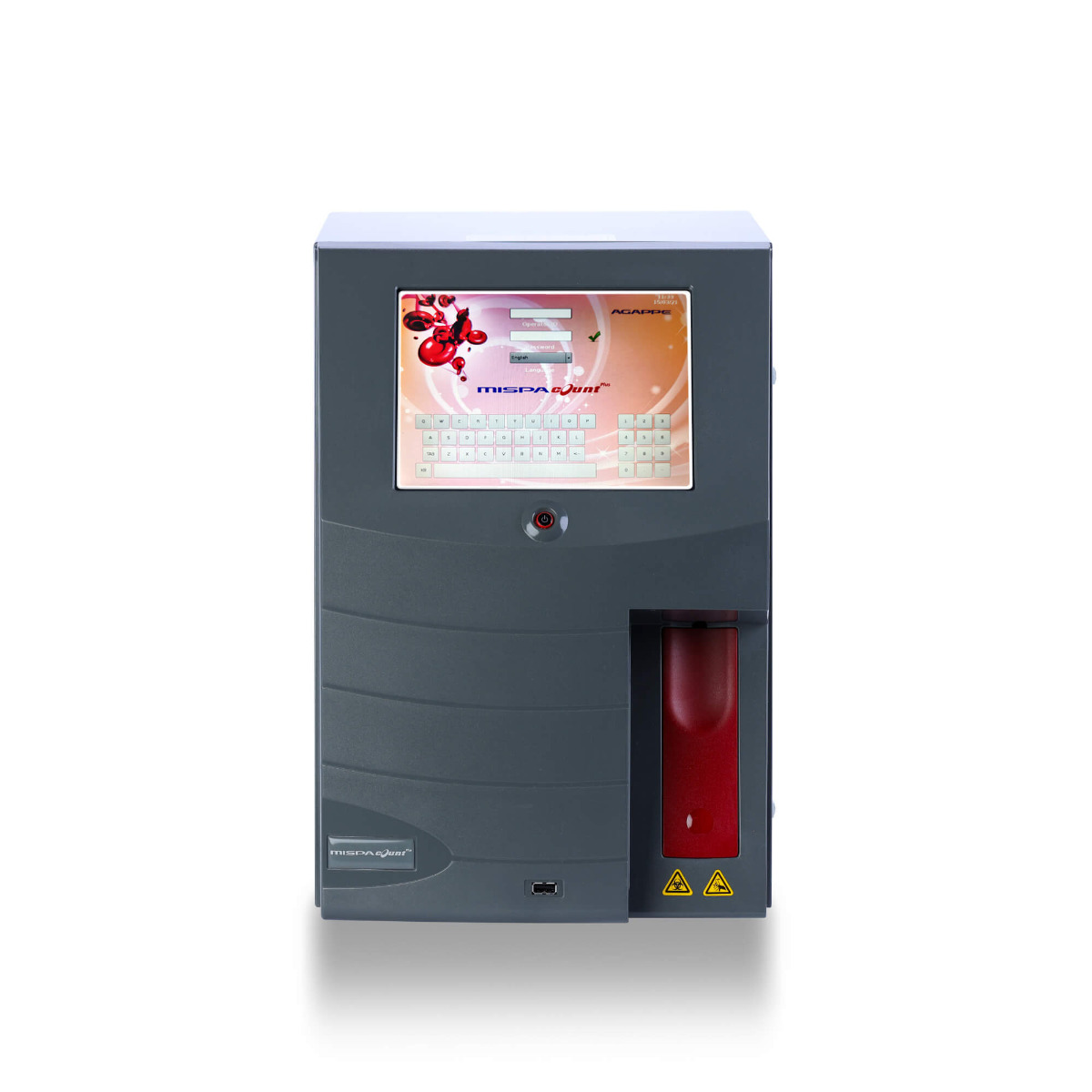
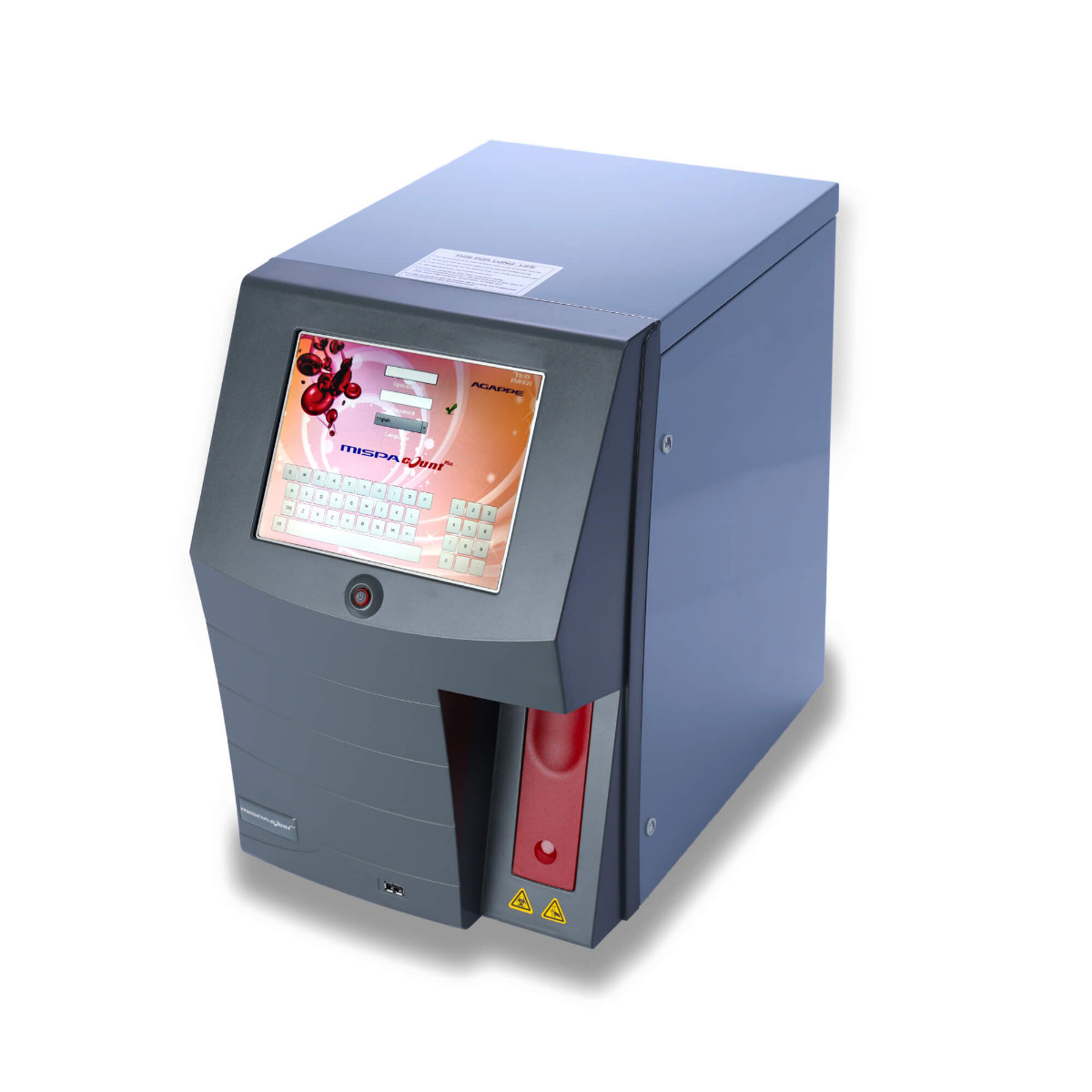
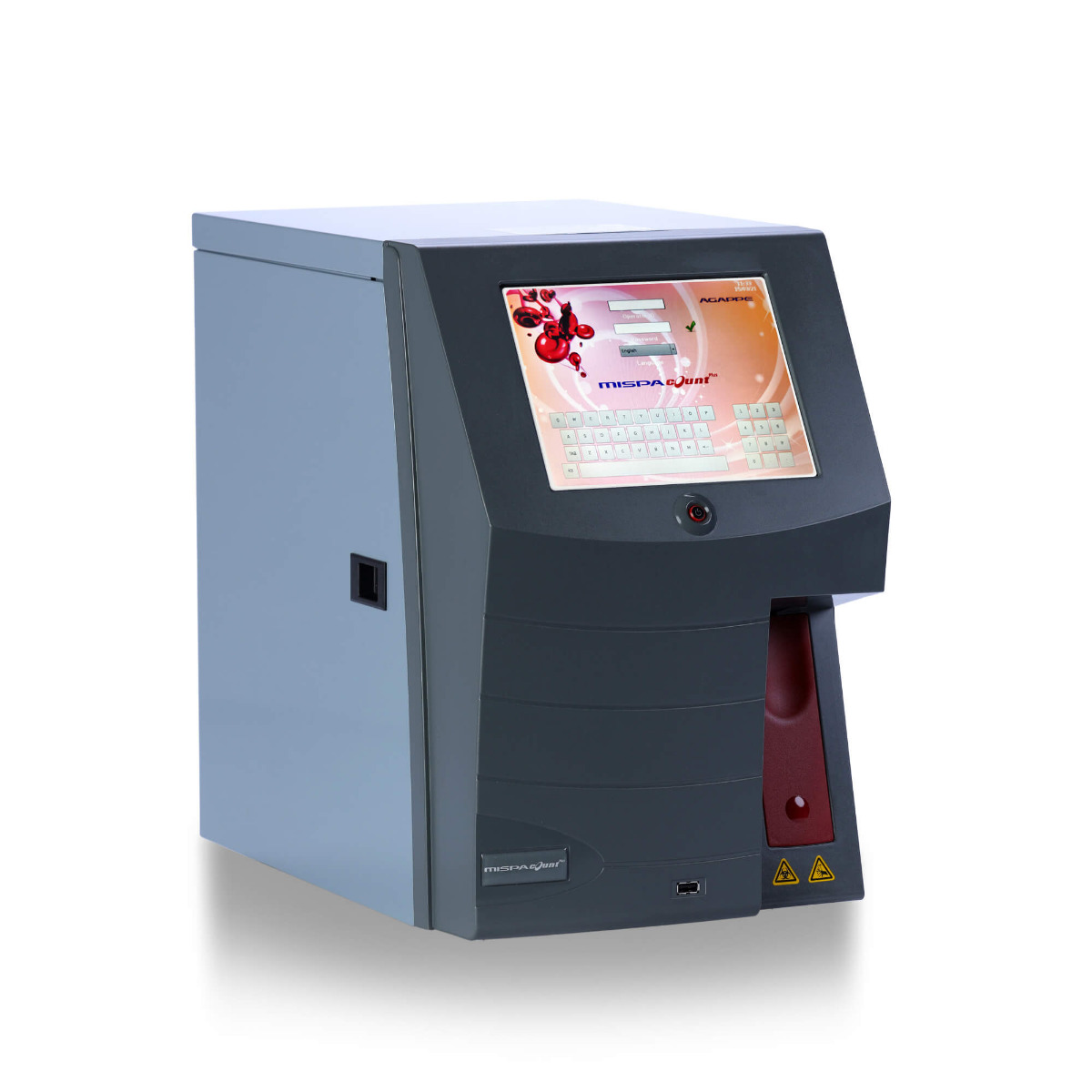
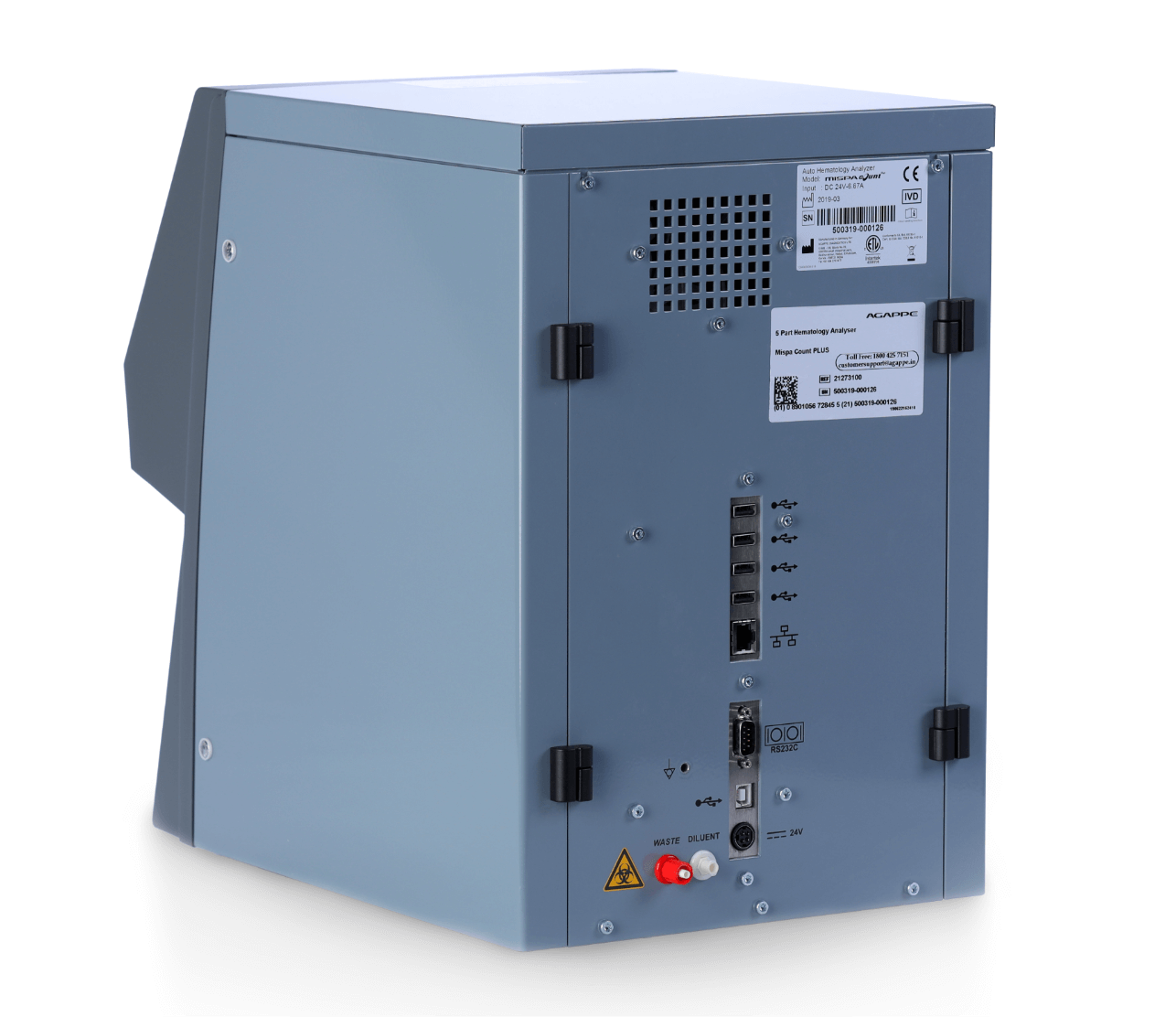
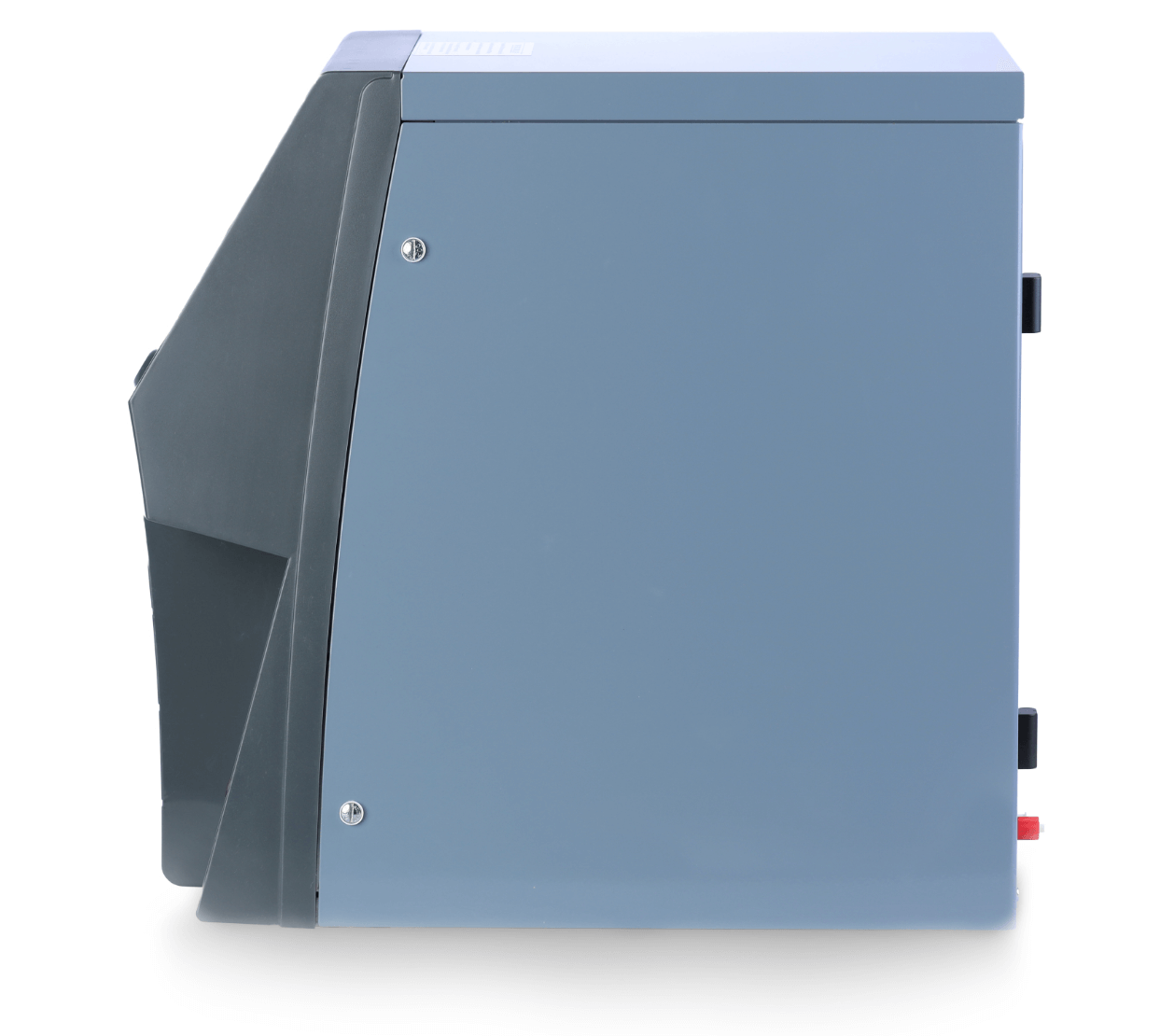
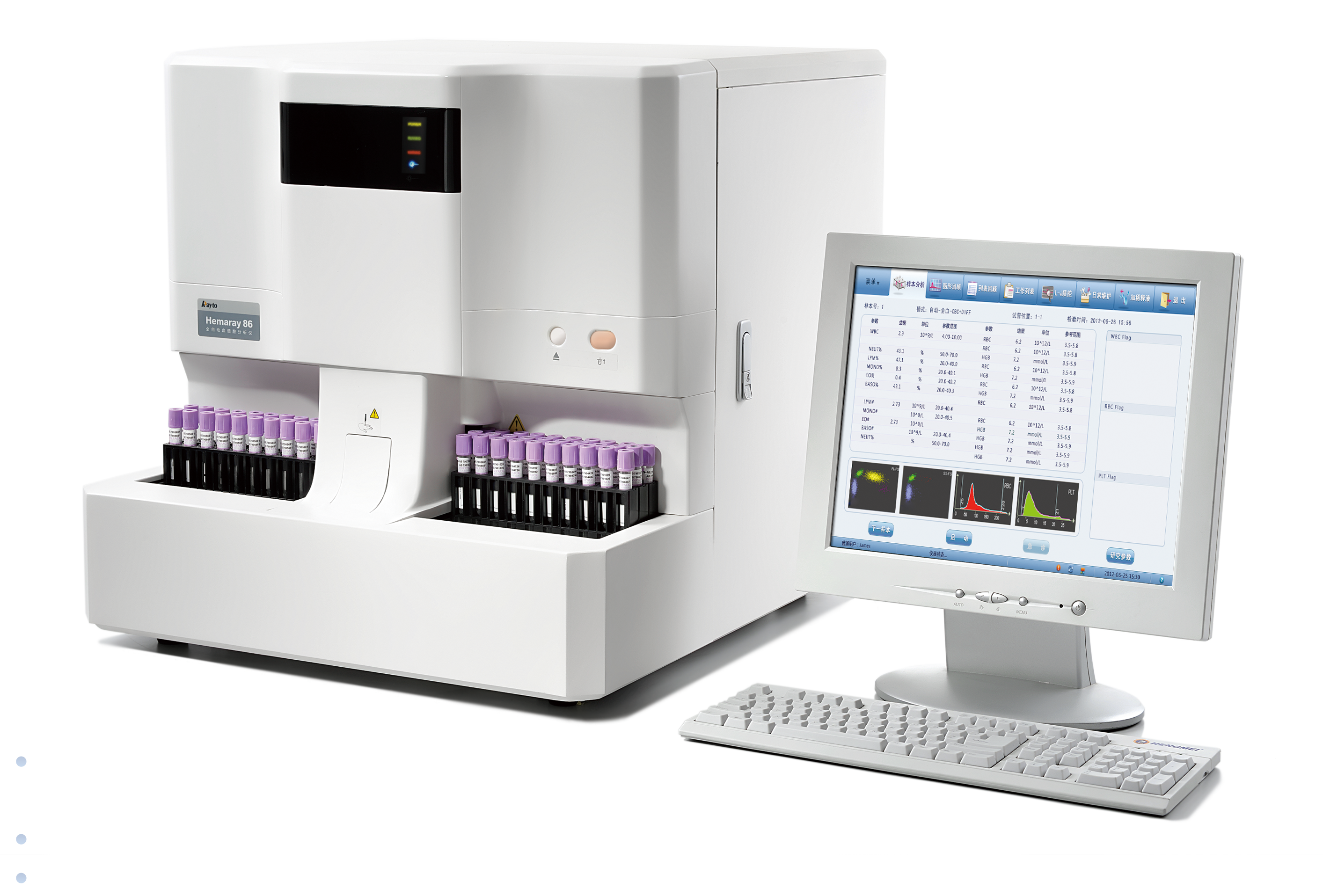
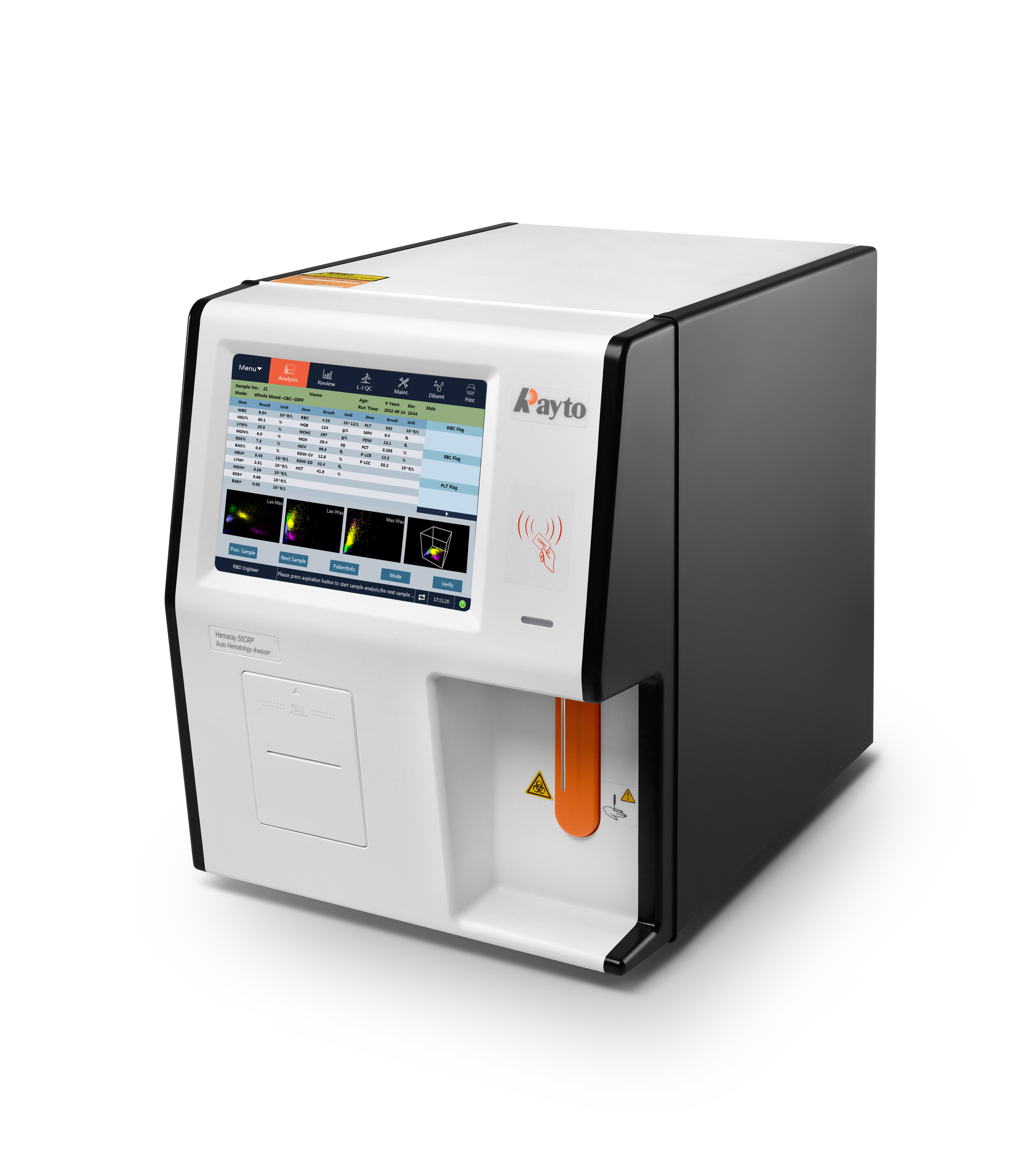
Mispa Count Plus Automated Hematology 5Part Diff Analyzer (5 Part Differential Cell Counter)
Reliable and accurate results is the need of time. Mispa Count Plus is a compact 5 part differential hematology analyzer (differential cell counter) which offers cutting edge technology solutions to perfectly satisfy the quality needs of the laboratory. Mispa Count Plus comes with the German technology, to efficiently generate reliable and accurate results, and thereby ensures the right fit for the laboratory. Mispa Count plus is a logical choice for those who are looking for a cost-effective solution with no compromise on quality. Agappe’s Mispa Count Plus, a 5 Part differential cell counter establishes a new standard in blood count analysis providing remarkable laboratory savings in space, time and operating costs.
*Features :
-5 Part Differential Cell Counter with 3 Histogram and Scatter plot for WBC
-8.4” LCD touch screen matching the eye contrast ratio
-Efficient system with throughput of 60 Samples/Hour
-LED (Light Emitting Diode) based flow cytometry
-Triple counting technology for accurate results
-Sturdy hardware with minimal maintenance & optimal workflow management
-Low operational cost and improved laboratory efficiency with Cyanide free reagent
-Storage capacity of 35,000 results memory with scatter plot
-Sampling Modes – Whole blood (15.6 uL) | Pre-diluted (20 uL)
-Aperture size of 80 micron for WBC & 50 micron for RBC and PLT
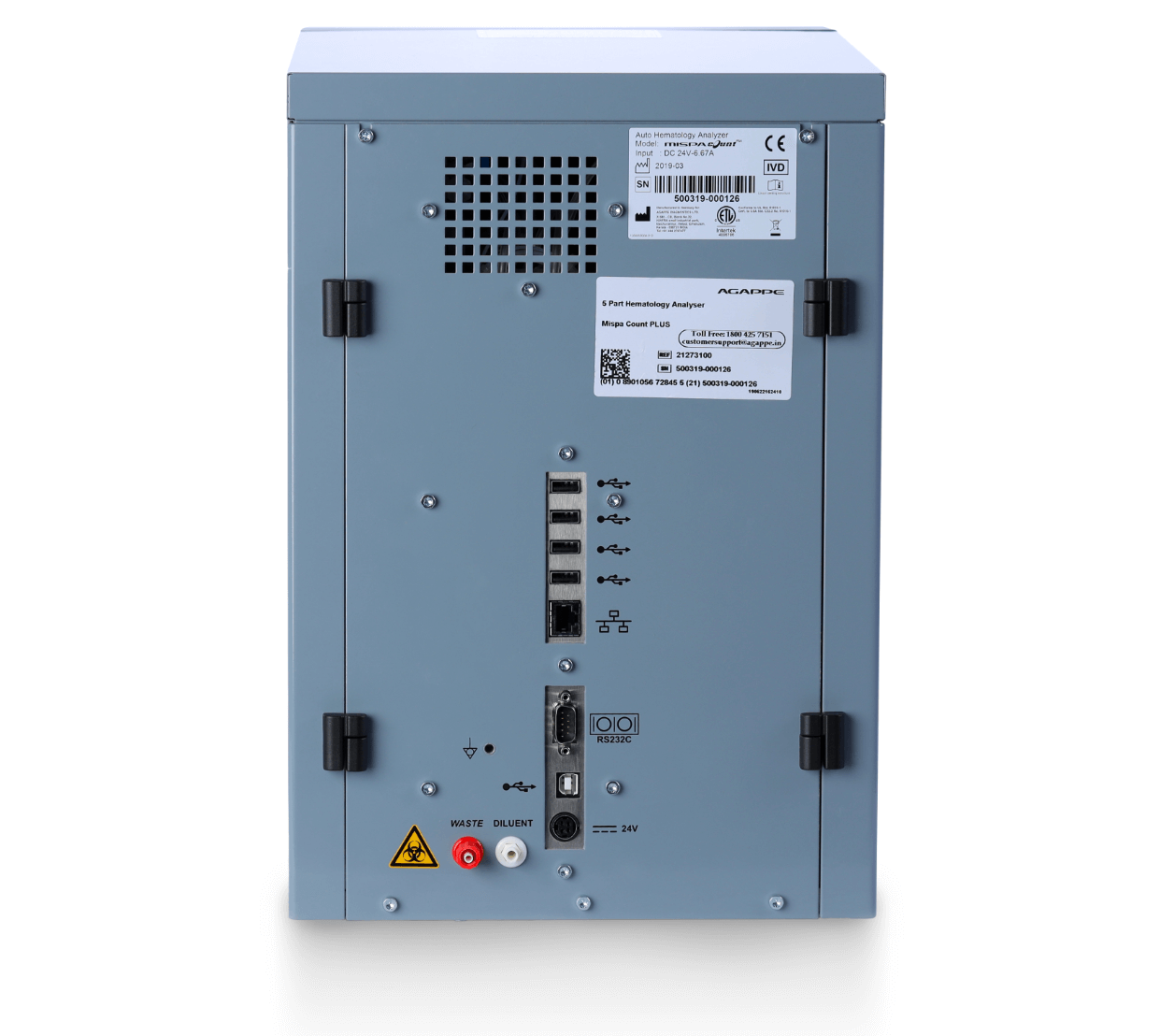
-Connectivity of 5 USB ports, RS 232, Ethernet – RJ45
-Reagents – Diluent D5, Cleaner C5, Lyse L5, Probe Cleaner P5
The counting as well as the discrimination of the cellular elements of the blood sample in Mispa Count Plus is based on
Enhanced Electrical Impedance for Cell counting
This technic is based on the modification of the impedance of a calibrated aperture soaking in an electrolyte and going through a constant current delivered by two electrodes located on both sides of the aperture.
A vacuum applied on a side of the aperture allows the cells passage. Cells oppose their physical volume to the current passage.
A voltage impulse is registered at the electrode’s terminal. The height of this impulse is proportional to the cell volume.
The principle of this technology called is based on the introduction of the sample solution flow in the flow cell with low pressure and the introduction of the diluent sheath with a high pressure. Thus, the diluent sheath drives the sample flow straight across the cuvette through the detection area.
LED based Flow Cytometry for Differential
The main advantages are:
High level of reliability of the optical adjustment.
Only two measurement axes for five parameters.
High resolution matrix.
Low level of contamination between two measurements.
Low Reagents consumption
Non-Cyanide based method for Haemoglobin
The haemoglobin measurement is directly done in the WBC chamber, by spectrophotometry ( = 545 nm)